
CPR training and female patients by Rebekah Carrow, Project Manager, Emergency Skills, Inc.
Studies have shown that women are less likely to receive CPR in public. Bystanders report being afraid of hurting a female patient or being accused of inappropriate touching.
Cardiovascular disease is the number one killer of women. The American Heart Association (AHA) has been raising awareness about women and cardiovascular disease since 2004 with their Go Red for Women campaign. Cardiovascular disease is an umbrella term that refers to multiple conditions including heart attacks. Women and men report different symptoms leading up to a heart attack.
Heart attack symptoms for women include:
- Chest pain or tightness
- Fainting
- Indigestion
- Extreme fatigue
- Shortness of breath
- Nausea
- Vomiting
- Back and jaw pain
Heart attack symptoms for men include:
- Nausea
- Jaw, neck, or back pain
- Chest pain or tightness
- Shortness of breath
Cardiovascular disease and heart attacks can lead to sudden cardiac arrest. Sudden cardiac arrest is when the heart stops beating. The patient is not conscious, unresponsive, and not breathing. Immediate CPR (Cardiopulmonary Resuscitation) provides the patient with the best chance of survival.
How do we bridge the gap between women’s need to receive life-saving CPR and bystander’s resistance?
- CPR Training
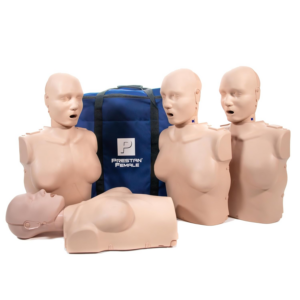
As a leader in CPR training and a certified woman owned business, ESI has deployed female manikins in our CPR/AED training programs.
These manikins have been included in our classes for over a year now. Some ESI CPR instructors have reported participants jumping right into the class with little resistance which normalizes CPR on female bodies. Some ESI CPR instructors have noted nervous energy, comments, or giggles. Our instructors then coach lay responders to move pass their nerves in a safe training environment instead of in an emergency where precious seconds count. ESI is proud to integrate these female manikins into our training classes as another example of our commitment to high quality CPR training.
Resources:
Women and CPR | Go Red for Women